
Women show greater capacity to compensate for brain damage in cases of genetic frontotemporal dementia
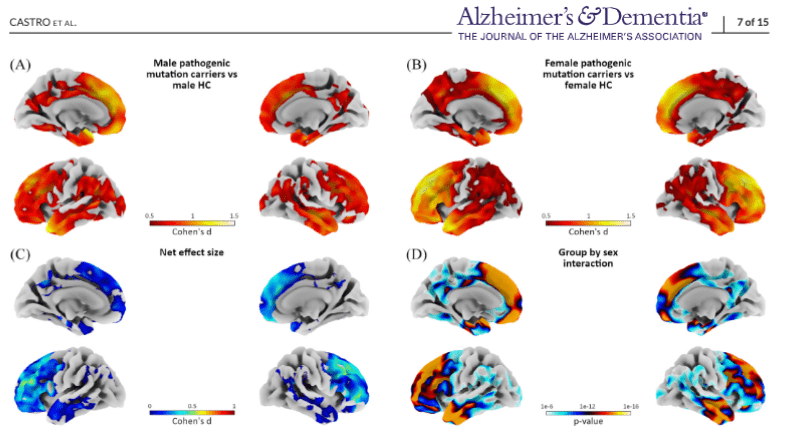
Frontotemporal dementia (FTD) encompasses a diverse group of neurodegenerative diseases characterized by progressive deterioration in social behavior, language, and executive functions. This condition has a strong genetic basis, with up to 30% of affected individuals carrying autosomal dominant mutations. Sex has gained importance in neurodegenerative research, especially in Alzheimer’s disease, where evidence shows that, together … Read more
Identification of ARPP21 as a New Gene Linked to ALS

Identification of a pathogenic mutation in ARPP21 in patients with amyotrophic lateral sclerosis

Amyotrophic lateral sclerosis (ALS) is a neurodegenerative disease that causes the progressive degeneration of motor neurons, the cells responsible for transmitting signals from the brain to the muscles. While the exact cause of this rare disease remains unknown, around 40 genes have been associated with ALS. In a study published in the Journal of Neurology, … Read more

Myelin loss in C9orf72 hexanucleotide expansion carriers

Myelin loss in C9orf72 hexanucleotide expansion carriers   The expansion of the intronic GGGGCC repeat (G4C2) in the C9orf72 gene is the most common genetic cause of Frontotemporal Dementia (FTD), Amyotrophic Lateral Sclerosis (ALS) and in the continuum of FTD/ALS. Three pathological mechanisms associated with the presence of this genetic alteration have been described: a … Read more

The link between Alzheimer’s disease and Down syndrome

Association of Alzheimer Disease With Life Expectancy in People With Down Syndrome

The link between Alzheimer’s disease and Down syndrome People with Down syndrome are genetically predisposed to developing Alzheimer´s disease. The strong association between Alzheimer disease and Down syndrome has a genetic basis through a gene-dose effect of the amyloid precursor protein (APP) gene located on chromosome 21, which is triplicated in this population. Consequently, neuropathologic changes associated with … Read more

New plasma biomarker to detect Alzheimer’s disease in Down syndrome individuals

Down Alzheimer - Plasma Markers - APOE

Plasma biomarkers Scientists worldwide are immersed in the race for accurate, non-invasive and accessible biomarkers to detect and diagnose Alzheimer’s Disease. To date, major scientific advances allowed the identification of several biomarkers in cerebrospinal fluid or using positron emission tomography (PET). Yet, these methods are either invasive or expensive and not easily accessible to all … Read more

Dr. Oriol Dols-Icardo, awarded by Fundación hna

Fundación hna - Oriol Dols-Icardo - Sant Pau Memory Unit

Research award by Fundación hna Fundación hna has awarded Dr. Oriol Dols-Icardo the prize of the first edition of the “Premio de Investigación Científica de Salud“. This is a competitive call for funding a research project on Amyotrophic Lateral Sclerosis (ALS), in which a total of 19 proposals have been submitted. The project funded by … Read more