


New reference values for cognitive normality allow earlier detection in one of every five cases of mild cognitive impairment
The first step in the diagnostic workup of individuals presenting with cognitive symptoms is to determine whether there is objective cognitive impairment. Ideally, this is done through a neuropsychological evaluation: a battery of cognitive tests in which the...
Study of brain perfusion in adults with Down syndrome along the Alzheimer’s disease continuum
Cerebral perfusion is the amount of blood reaching a given brain region at any given time. In other words, it is the “irrigation” that supplies neurons with oxygen and nutrients. When perfusion decreases or becomes abnormally distributed, it may indicate that an area...
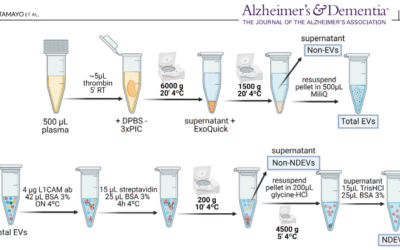
proNGF in Neuron-Derived Extracellular Vesicles: An Early Alzheimer’s Signature in Down Syndrome
proNGF in Neuron-Derived Extracellular Vesicles: An Early Alzheimer’s Signature in Down Syndrome Down syndrome (DS) is a genetic form of Alzheimer’s disease (AD), with a high risk of early-onset neurodegeneration. This study, published in Alzheimer’s & Dementia,...
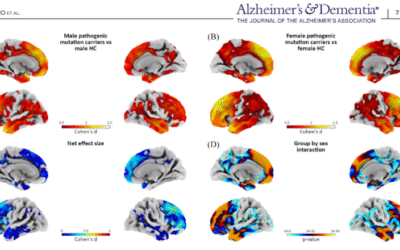
Women show greater capacity to compensate for brain damage in cases of genetic frontotemporal dementia
Frontotemporal dementia (FTD) encompasses a diverse group of neurodegenerative diseases characterized by progressive deterioration in social behavior, language, and executive functions. This condition has a strong genetic basis, with up to 30% of affected individuals...

Single-cell RNA Sequencing Highlights Key Role of Natural Killer Cells in ALS
The immune system plays a significant role in the development of various neurodegenerative diseases. In this study published in the Journal of Neuroinflammation, the role of the immune system in this disease is investigated for the first time at single-cell...

Identification of ARPP21 as a New Gene Linked to ALS
Amyotrophic lateral sclerosis (ALS) is a neurodegenerative disease that causes the progressive degeneration of motor neurons, the cells responsible for transmitting signals from the brain to the muscles. While the exact cause of this rare disease remains unknown,...

Enhanced Resolution to Study Synaptic Tau Pathology in Alzheimer’s Disease
Our recent study shows that combining Array Tomography with an advanced imaging technique called Two-Colour Direct Stochastic Optical Reconstruction Microscopy (dSTORM) allows for the observation of tau pathology at synapses with unprecedented detail. This approach...
Synaptic Proteins VAMP-2 and SNAP-25 as Biomarkers in Dementia with Lewy Bodies
Dementia with Lewy bodies (DLB) is one of the leading causes of dementia, yet clear biomarkers for its diagnosis and monitoring are still lacking. The Lewy bodies in the brains of people with DLB are primarily composed of accumulations of the protein α-synuclein,...