
proNGF in Neuron-Derived Extracellular Vesicles: An Early Alzheimer’s Signature in Down Syndrome
Down syndrome (DS) is a genetic form of Alzheimer’s disease (AD), with a high risk of early-onset neurodegeneration. This study, published in Alzheimer’s & Dementia, is the first to analyze levels of the nerve growth factor precursor protein (proNGF) in neuron-derived extracellular vesicles (NDEVs) isolated from plasma in individuals with DS across the AD clinical continuum.
 What was done in this study?
 What was done in this study?
The study included 139 adults with DS (45 asymptomatic and 94 symptomatic for AD) and 37 healthy controls. NDEVs were isolated from plasma to quantify proNGF levels. Additional assessments included CSF and plasma biomarkers, cognitive testing, and basal forebrain volume.
Main findings
- proNGF levels in NDEVs increased with age in individuals with DS, starting in the third decade of life—about 20 years before clinical AD onset in DS.
- proNGF levels were significantly higher in NDEVs from DS individuals compared to controls, with the highest levels seen in symptomatic participants.
- proNGF levels correlated positively with tau pathology and neuronal damage biomarkers.
- Associations were also found with episodic memory performance, particularly in individuals with moderate intellectual disability.
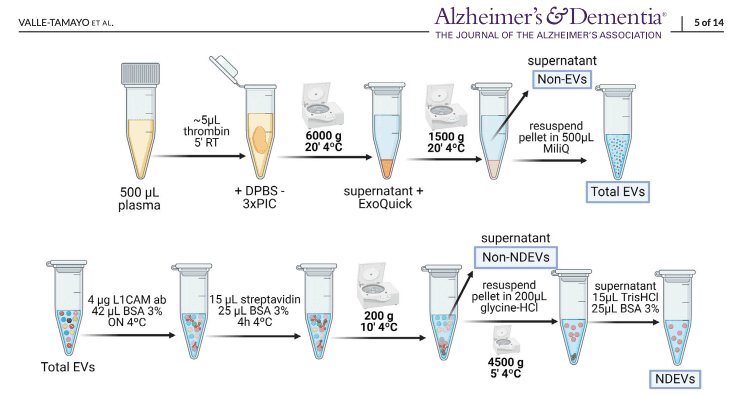
Study relevance
This study highlights the potential of proNGF in NDEVs as a non-invasive biomarker for tracking neuronal injury and tau pathology in the progression of Alzheimer’s disease in DS. It is the first to show that such changes can be detected early in plasma using liquid biopsy, which may enable earlier interventions in this high-risk population.