

Brain Metabolism in Alzheimer’s Disease Associated with Down Syndrome: New Findings with FDG-PET
Down syndrome (DS) is a genetic form of Alzheimer’s disease (AD). Due to the overexpression of the APP gene on chromosome 21, nearly all individuals with DS develop AD-related pathological changes and dementia secondary to this disease. Brain metabolism,...
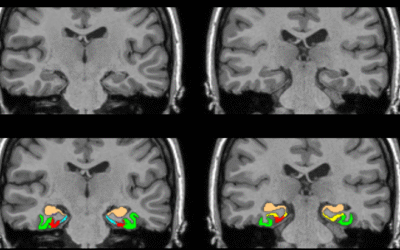
Medial Temporal Lobe Atrophy in Down Syndrome Along the Alzheimer’s Disease Continuum
Medial Temporal Lobe Atrophy in Down Syndrome Along the Alzheimer’s Disease Continuum The medial temporal lobe (MTL) is one of the first regions affected by tau pathology, making structural changes in these areas promising biomarkers for identifying early signs...
World Alzheimer’s Day: Sant Pau Focuses on Individuals with Down Syndrome
On World Alzheimer’s Day, the aim is to raise awareness about this incurable neurodegenerative disease that primarily affects elderly individuals. However, this year, Hospital de Sant Pau has shifted its attention to a particularly vulnerable group: individuals...

We are looking for participants for a study
The Memory Unit of Sant Pau Hospital is seeking participants for the following study: “Study on the characteristics of the cessation of driving process in older adults with and without cognitive impairment” Requirements 👇 Being a family member or close acquaintance of...

Synaptic Tau Oligomers in Alzheimer’s Disease – A Possible Culprit in the Spread of Tau Pathology throughout the Brain
Synaptic Tau Oligomers in Alzheimer’s Disease – A Possible Culprit in the Spread of Tau Pathology throughout the Brain Alzheimer’s disease is considered one of the most common causes of dementia in older individuals. Among the...

Why study sex differences in Alzheimer’s disease and in the context of Down syndrome?
Why study sex differences in Alzheimer’s disease and in the context of Down syndrome? The topic of sex differences is increasingly recognized as a top priority in neurology research, particularly in the context of precision medicine and personalized care strategies....

The effect of different preanalytical conditions on the stability of blood biomarkers in the diagnosis of Alzheimer’s disease
Stability of plasma samples and Alzheimer’s biomarkers Alzheimer’s disease is considered one of the most common causes of dementia in the elderly. Recently, blood biomarkers: Aβ1-42, Aβ1-40 and phospho Tau181 (p-Tau181), are proving useful in the diagnosis...

Cross-sectional versus longitudinal cognitive assessments for the diagnosis of symptomatic Alzheimer’s disease in adults with Down syndrome
Cross-sectional versus longitudinal cognitive assessments for the diagnosis of symptomatic Alzheimer’s disease in adults with Down syndrome Individuals with Down syndrome are at a high risk of developing the clinical symptoms of Alzheimer’s disease in old age...